

Glory and Majesty

by Zan Campbell
“Aragorn threw back his cloak. The elven-sheath glittered as he grasped it, and the bright blade of Andúril shone like a sudden flame as he swept it out. ‘Elendil!’ he cried. ‘I am Aragorn son of Arathorn and am called Elessar, the Elfstone, Dúnadan, the heir of Isildur Elendil’s son of Gondor. Here is the Sword that was Broken and is forged again! Will you aid me or thwart me? Choose swiftly!’ Gimli and Legolas looked at their companion in amazement, for they had not seen him in this mood before. He seemed to have grown in stature while Éomer had shrunk; and in his living face they caught a brief vision of the power and majesty of the kings of stone. For a moment it seemed to the eyes of Legolas that a white flame flickered on the brows of Aragorn like a shining crown.” ~ J.R.R. Tolkien, The Two Towers
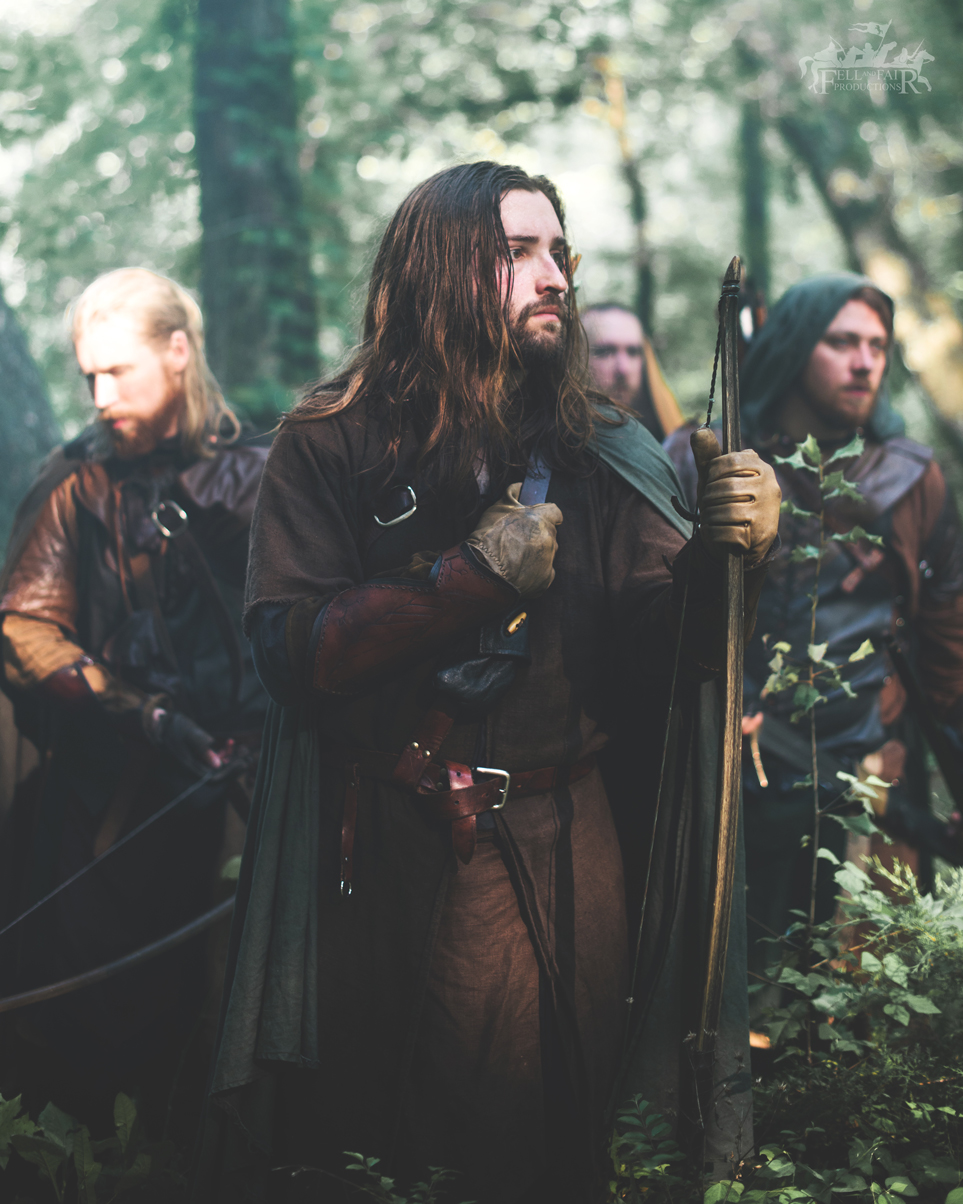
A few years ago, while reading this passage in The Two Towers, I stopped to ponder the scene as written by Tolkien. While this brief encounter is rushed through in the movies, it is very key in developing Aragorn’s character in the books. Here we have a scene where Aragorn, while claiming his lineage and position, physically manifests glory and majesty to those who beheld him. Envisioning this scene began a train of thought and a study that I will attempt to relate in this article.
I began a casual word study of “majesty” and “glory” in The Lord of the Rings along with Tolkien’s other works. I found that Tolkien uses the words very differently than we often do in the 21st century. In the modern context we usually use glory in the context of honor, esteem or accolades. “The team reveled in their glorious victory” or “What a majestic finish to that race by number 42!” What we really mean is, that those athletes are gaining great respect and notoriety for their actions on the field. We rarely imply a physical change or manifestation of glory and majesty. Not so Tolkien. To be sure, from time to time he uses the word interchangeably with fame, but those are rare cases. At this point you may be asking, why does this matter? What difference does it make if I think of glory as fame or as a something physical, that can be felt or seen? Because this is fantasy! Because this is what writers these days call “world building”. What we see in the passage at the opening of this article is an instance where the veil is for a moment drawn back. In the scriptures it would say “their eyes were opened”, and the viewers can see past the gray cloak and tattered garb of the ranger and see the king at the height of his power: a king of men as has not been seen since the fall of Elendil and Isildur.
For those who are fans of the movies as brought to us by Peter Jackson, there are a few instances where this physical display of majesty is done well. The first that comes to mind is Galadriel as she struggles with the temptation of the ring. Tolkien writes of that moment:
“She lifted up her hand and from the ring that she wore there issued a great light that illuminated her alone and left all else dark. She stood before Frodo seeming now tall beyond measurement, and beautiful beyond enduring, terrible and worshipful.”
Here for a moment Galadriel was revealed in the majesty that she held, hidden in the form of a slim elf woman, but now displayed for those who had the eyes to see.
The rest of the examples mostly involve Gandalf when he displays his majesty throughout the story. When he confronts Bilbo in Bag End (the famous, “I am no conjurer of cheap tricks!” line), when meeting the three hunters in Fangorn, and when he confronts Théoden (who is possessed by Saruman at the time) in Meduseld.
So what makes these instances different from when Aragorn was revealed in his majesty in the books? In my opinion, it is because the two subjects, Galadriel and Gandalf, were revealing their own power, the power of a wizard and, in both cases, the bearer of one of the elven rings. But not so Aragorn. Aragorn does not “reveal himself” he does not use his power to change what people see in him. What happens in this moment happens to him, it is not done by him. So what does this mean? It means that in Tolkien’s mythos, this physical display of glory can come upon a man (or perhaps an elf or hobbit?) based on their own virtue/deeds without the need for, or assistance of, the magical power held inside an individual. So even those of a less mighty nature can, at times, reveal the power of their will and nature in a glorious moment. There are several other examples, of men specifically, where a leader of men displayed such glory. I am reminded of one of my favorite scenes in the trilogy describing of Théoden, and his mighty charge:
“Suddenly the king cried to Snowmane and the horse sprang away. Behind him his banner blew in the wind, white horse upon a field of green, but he outpaced it. After him thundered the knights of his house, but he was ever before them. Éomer rode there, the white horsetail on his helm floating in his speed, and the front of the first éored roared like a breaker foaming to the shore, but Théoden could not be overtaken. Fey he seemed, or the battle-fury of his fathers ran like new fire in his veins, and he was borne up on Snowmane like a god of old, even as Oromé the Great in the battle of the Valar when the world was young. His golden shield was uncovered, and lo! it shone like an image of the Sun, and the grass flamed into green about the white feet of his steed. For morning came, morning and a wind from the sea; and the darkness was removed, and the hosts of Mordor wailed, and terror took them, and they fled, and died, and the hoofs of wrath rode over them. And then all the host of Rohan burst into song, and they sang as they slew, for the joy of battle was on them, and the sound of their singing that was fair and terrible came even to the City.”
I included this whole quote because I think it is all required to really bring out the full glory of this scene. Detail builds upon detail, from the banners and golden shield to the grass becoming green as Théoden rode over it followed by the singing of an army. As Théoden rides in green and golden splendor across the fields of the Pelennor to battle, he is even compared to Oromé – one of the Valar – riding to war. Here again we see a man, without the power of a ring or enchantment, display glory and majesty in a physical form. Two instances where the character of a man was put on display for the world to see, and it was wonderful to behold.
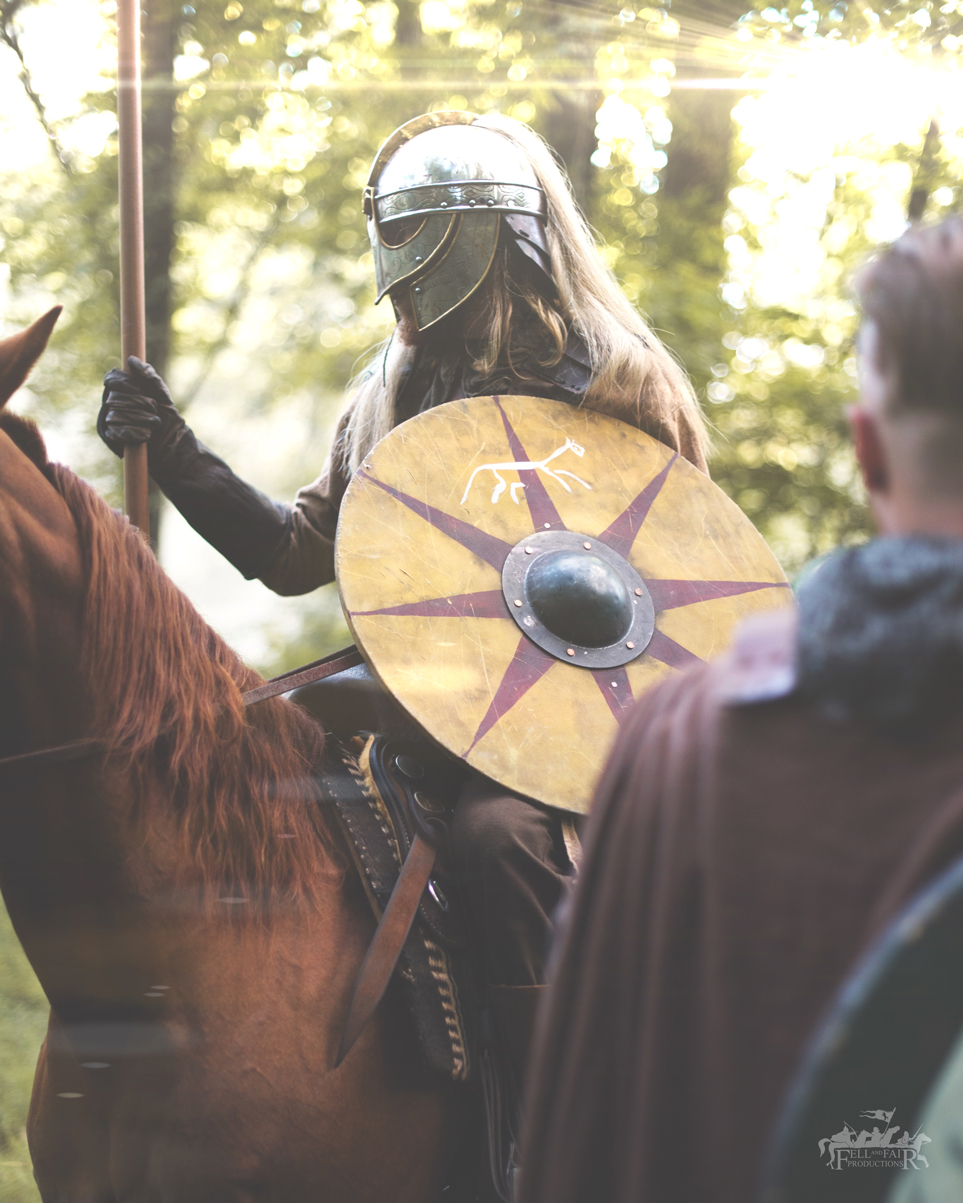
I think you and I would react as Éomer did to Aragorn when he saw his glory, “Éomer stepped back and a look of awe was in his face. He cast down his proud eyes. ‘These are indeed strange days,’ he muttered. ‘Dreams and legends spring to life out of the grass.”
Tolkien provided in his mythos a way for people to see heroes being heroes. So often in war, and I would hazard a guess that this was Tolkien’s experience in the Great War, heroes are passed by on the street and the deeds they do on the battlefield are lost among the smoke and fog of war. But in a world just a little more right than ours, heroes can be seen at times by other mortal men. They can be known amongst their fellows, and the majesty that is often concealed by humility is revealed in splendor.
Now an argument could be made that these were just “picturesque scenes”, where the “lighting was just right” and “people saw what they wanted to see”. To be sure, natural elements of light, polished metal, and the wind could have an impact on each of these scenes. But this is an aspect of Tolkien’s world building that I love. He does not come right out and say it either way. Maybe it was chance that the sun broke out from the clouds after days of unending shadow just as Théoden rode across the Pelennor and maybe the grass was especially green on his path. Maybe Aragorn was standing on a rock so he was taller than Éomer, and the wind just blew his hair majestically, and the sun just glistened off of sweat on his forehead. Maybe. Then again, maybe men, even those such as you and I can at time, through the virtue of their character, the strength of will, and the nobility of their purpose, come to physically display glory for those to see who could… and by that, be known for who they are.
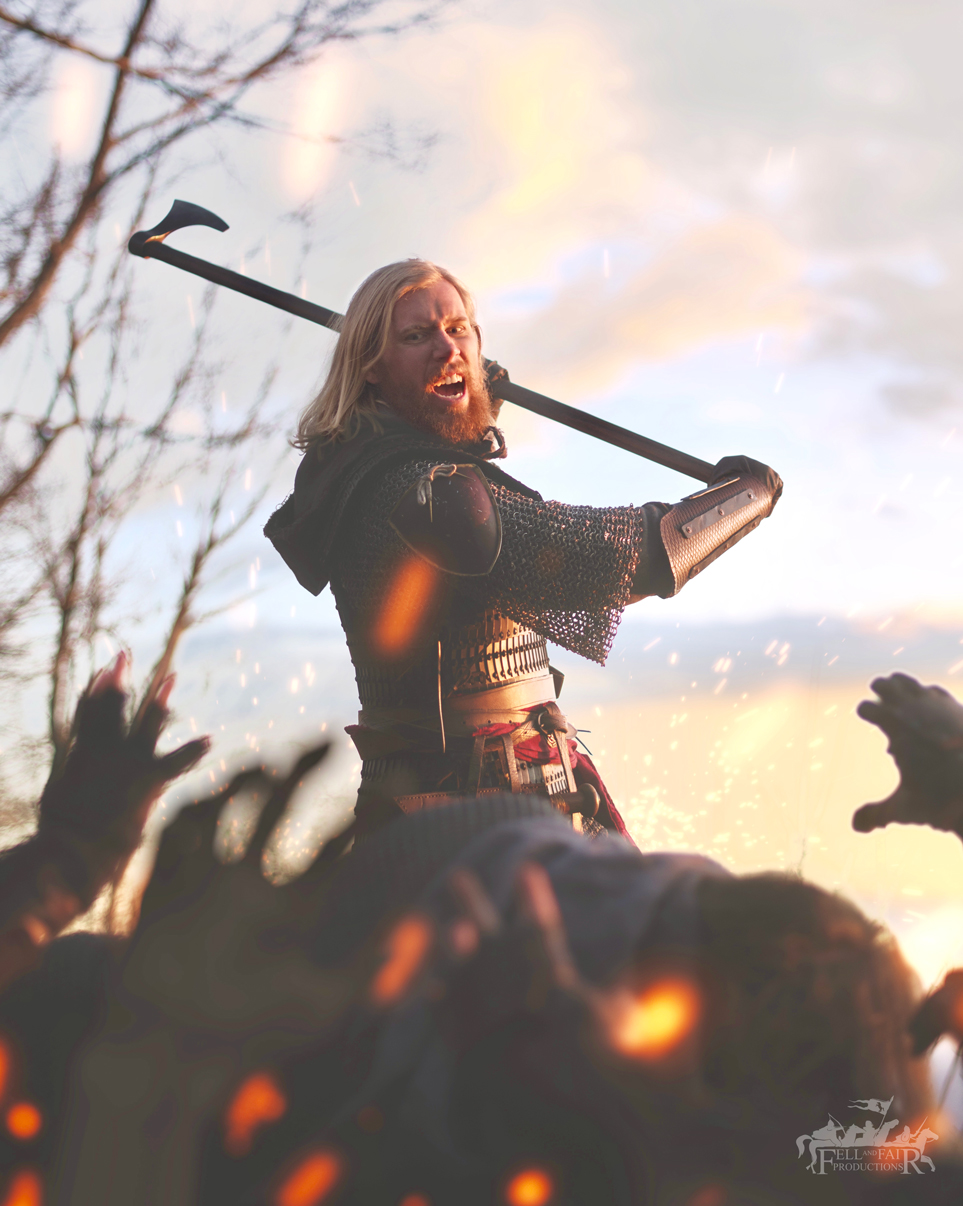
So as you read Tolkien’s works, I would encourage you to look at his use of words like glory and majesty when applicable, consider in your mind’s eye, what that physical glory would look like. When Húrin stood alone at the last and slew seventy trolls each time crying, ‘Aurë entuluva! Day shall come again!’ – was the strength and heart of men revealed in glory about him? Did heroes like Beren, Túrin or Tuor ever display such glory? Did fate allow for a moment their true heroic nature to be revealed? Or was it simply a chance ray sunlight that for a moment shone upon one man alone?